
Effective Ways You Can Foster Resilience in Your Children

It can be hard to answer the question, "What should I do when my child is dealing with a hardship?" It's not always easy to know what sorts of coping skills they need, nor how best to offer them.
As a parent, you want your children to be resilient—the ability to handle whatever life throws at them and bounce back from setbacks. They will need that resilience to deal with the future, whether job challenges, school problems, relationship struggles, or even health difficulties. If your child has a setback, how do you help him regain calm?
While you can't control the challenges your children face, you can help them become stronger by making sure they develop skills for dealing with their emotions. Everyone faces hardships, and how we handle them makes us resilient. It's what we do to help our children grow from challenges that makes all the difference in their future happiness. Here are the effective ways you can foster resilience in your children:
Trust their feelings
You need to help your child understand that their feelings are real and that it is okay to have a range of them. We often want our children to avoid sadness or anger, but they need to learn to manage those emotions effectively. Don't dismiss their emotions—instead, acknowledge them. Saying, "I know you are disappointed, and I understand." This can help your child recognize that you accept and support their feelings.
It is also essential to know that what they feel is not permanent. It won't last forever. Your child may need some time alone to express or explore how he feels about a disappointment or other difficulty, but it doesn't mean you don't love him as a person. Many children want reassurance from parents in a crisis, but don't be overly worried if your child seems stoic or quiet during a difficult time.
Turn to each other
Children need to know that asking for help is okay. If they feel overwhelmed by their emotions, they need to trust that they can reach out and talk with you or another adult. You will probably have a better idea of how best to help your child manage an upset than he does. And it helps reassure them if you suggest some activities that might ease their distress. Say, "I know this is tough. We could go for a walk and find a quiet place to talk about what happened."
As you work through their feelings together, they will come to understand that you are on their side. Your child can come to trust that, even during difficult times, you will support and love them. This helps enhance your relationship with your child, which is an essential foundation for resilience development.
Focus on the future
As children grow, they face many challenges, including opportunities to deal with changes in their lives. They must have a chance to address difficult situations they may encounter. If they feel frustrated or impatient, they need to acknowledge that life may get tough. This is part of growing up and learning to handle problems. If your child encounters a challenging circumstance, he may need a bit of time to process it on his own. But, it's also important for him to realize that you are there for him whenever he needs you.
Have realistic expectations
Some parents have high expectations for their children, expecting them to be the best in everything they do. This can leave them feeling like a failure if they don't always succeed. Most children need to learn that everyone has good days and bad days, and learning from failure can be a positive thing. We also know that there are things we cannot control in life, even as adults. The more your child knows that life is unpredictable, the better prepared he will be for any challenges he may face.
Set good examples
You can't change your children's upbringing, but you can set an example as a parent and ensure that you set an example for them. As you model resilience by being strong in adversity, your children will develop their skills for dealing with challenges. They will learn to show resilience and be more likely to succeed.
Final Thought
Fostering resilience in your children is a challenge any parent can take on. You don't have to be perfect, but by setting good examples, you can help them develop resilience and make them ready for the future. They will be able to face the challenges that life throws their way and know that they have someone to turn to when the going gets tough. That kind of support is the best gift you can give your child.
— By Andrea Gibbs, Contributor

Andrea Gibbs. Born, raised, and still living in New York. I'm a work-at-home mom with a background in business development, strategy, and social media marketing. I'm a blog contributor at Montessori Academy to motivate and educate other parents about how they can get their children ahead of the game in school.
Products To Support The Home
〰️
Products To Support The Home 〰️

Also available at Teachers Pay Teachers!
These Developmentally Appropriate Activities: Speech and Language for the Early Learner provides lessons and activities for the Common Core Standards ELA Literacy. SL.K.1-6.
Also available at Teachers Pay Teachers!
Product Description
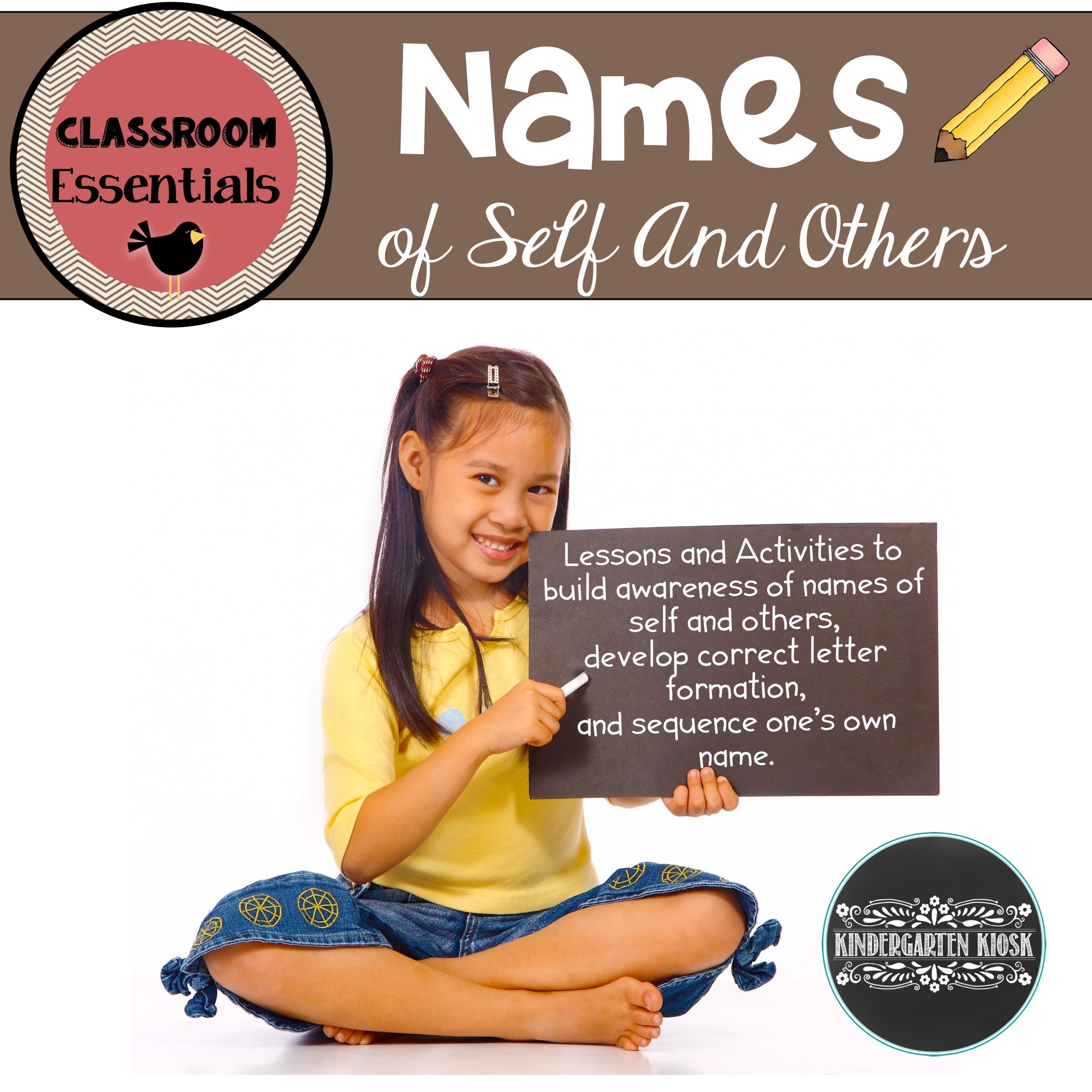
Names Practice Back To School Write Names of Self and Others
Time for back to school and teaching students how to write their own names and the names of classmates and others.
Children who are in the early stages of literacy development are well served if they are familiarized with the letters that make up their own name. This will not only provide an important link between speech and print, it will help them attend to sequencing, orientation and details within the construction of a word.
The lessons of this unit will draw attention to and provide practice with writing and reading their own names and expanding the benefits gained to include the names of classmates.
Table of Contents:
Water Cap Names: Ordering letters in names and transferring knowledge.
Name Puzzles: Building familiarity with alphabet letters and their function when spelling one's own name.
Name Cheer: (A variation of Name Puzzles): Identifying and sequencing the letters in names.
Shave a Name: Using correct handwriting technique to write names.
Rainbow Names: Spelling and writing names.
The "Nameapillar": Ordering letters in names.
Trace A Name: Tracing names using correct letter formation.
Name Fishing: Reading the names of classmates, then sorting according to beginning capital letter.
Name Dictionary: Alphabetizing classmates' names.
Names: A Guided Reading Book
Name Fun: Ten Additional Name Conquering Ideas
Name Game: Studying names of classmates
Name Chart: Studying names in a Morning Meeting routine
Mosaic Names: Spelling and writing names
Name Necklace: Spelling name
Spell-a-Name: Spelling own name and names of others.
Friend of the Day: Building Community through names
© Kindergarten Kiosk
Related Products
Back to School Themed Writing Activities
Back to School Sight Word Readers
Back to School Student Information Forms FREE
Chrysanthemum Names Thematic Unit
Follow For Updates and Freebies!
Be alerted as products are updated and/or added to. Get Special Freebies.

Your FULL YEAR PRESCHOOL Home Learning!