
Developing Fine Motor Skills and Glue Bottles
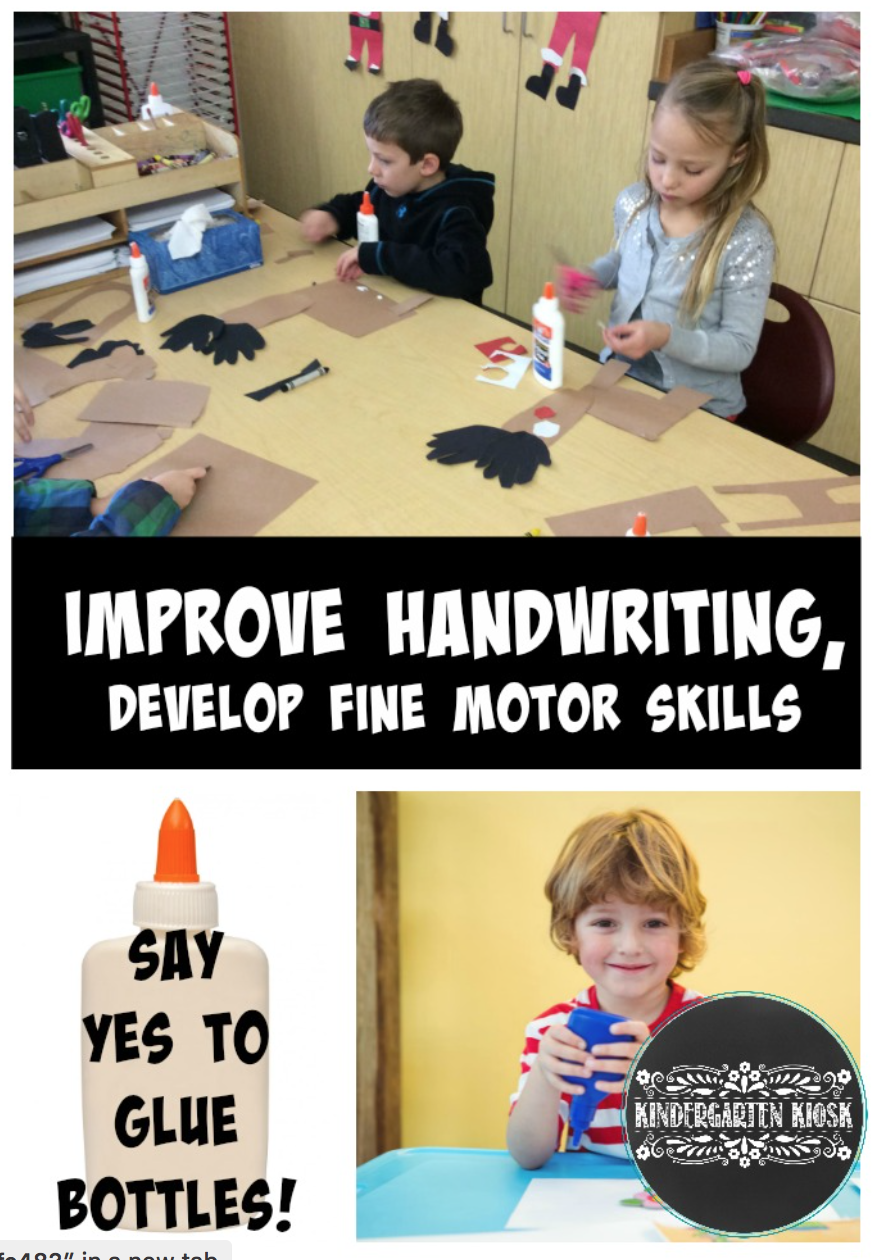
Developed fine motor skills are not only essential to complete everyday tasks such as eating, zipping, buttoning, and tying shoes, they are also necessary for the academic life of a early learner. Strong fine-motor skills are necessary for writing and cutting, and it is the job of educators to develop these skills.
One way to allow fine motor skills to develop is to use glue straight from the bottle. (Yes, I am anti glue sponges). Teaching students to use glue as glue should be used allows opportunity for independence, develops patience, and provides important strengthening of crucial fine motor skills that are imperative for hand strengthening and muscle development.
With opportunities for guided practice, young children can actually become very effective and efficient glue bottle users. And, all of the benefits that come with using glue bottle increases as hands develop and project advancement occurs. So, even though glue sponges may be less messy, (and in vogue), are these sponges helping in the development of young children?
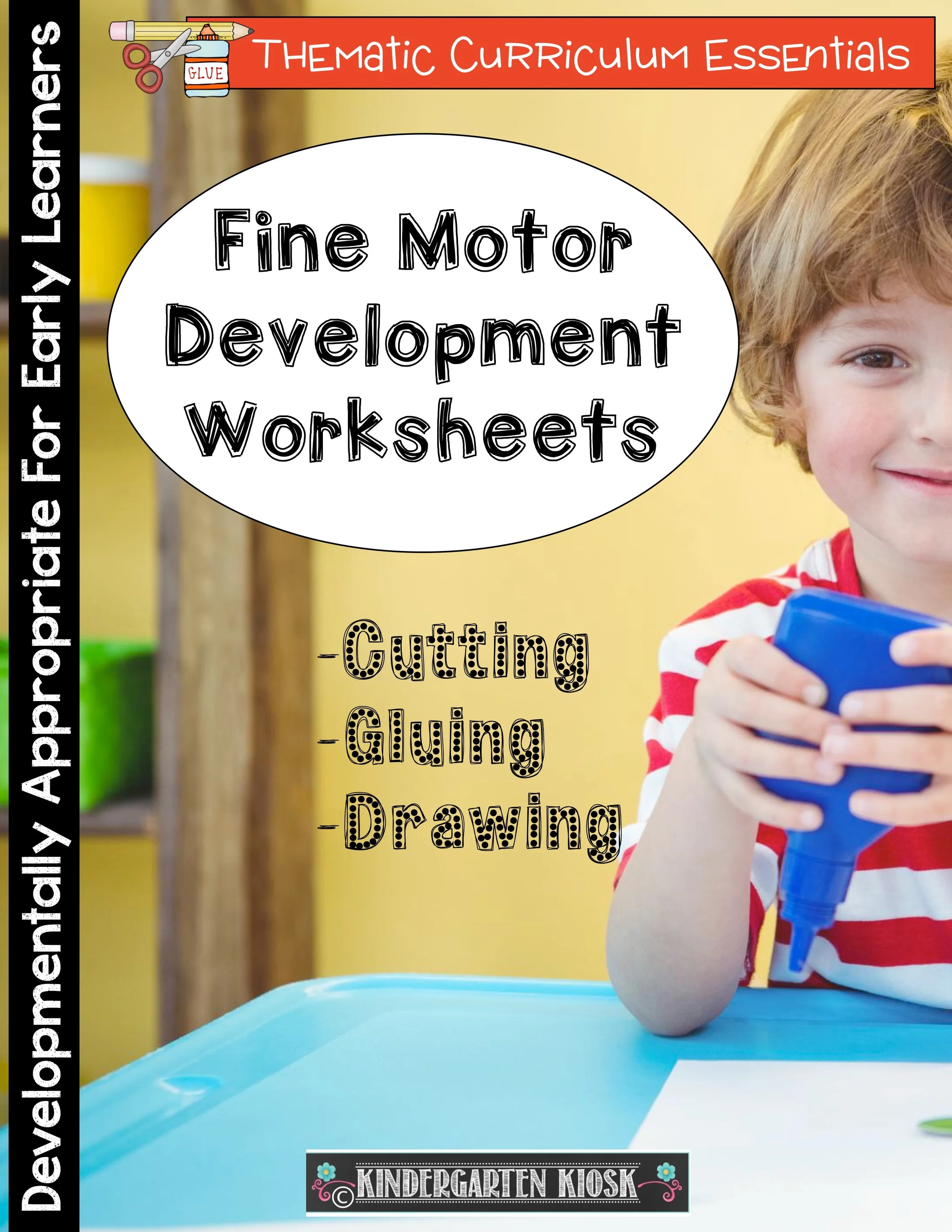
You can use any plain paper for gluing and cutting practice. If looking for something more strategic, the following product contains gluing, scissor and pencil practice for the young learner. It is great for glue bottle practice of "Just a Dot!" For developmental handwriting practice, you will love stick and curves!
Also available at Teachers Pay Teachers!
Build your child’s (students') fine motor skills as well as develop confidence by using these fine motor activities. Each category begins with novice activities and then moves forward in complexity; aiding development.

Handwriting No Tears Practice Worksheets
If you love Handwriting and no Tears, you will love this Uppercase Letter Formation product! There are two versions. The one page version, using a single sheet per letter, and a 1 1/2 page version that may be easier for little hands to manipulate. Both are included so the choice is yours.
Appropriate handwriting practice is especially important when it comes to the teaching of letter formation. These worksheets will fill that bill. Each worksheet is interactive and is completed in five steps.
1. Student cuts along dotted line.
2. Student cuts out sticks and curves.
3. Student glues the white pieces on the black letter.
4. Student traces and then writes the letter practicing the stick and curves.
5. To complete the page, the student can color the pictures that begins with the letter sound.
Related Products
Uppercase Alphabet Handwriting Practice
Lowercase Alphabet Handwriting Practice
Vowels on the Bus Handwriting Practice
Color Word Handwriting Practice
Sticks and Curves Handwriting Practice
Alphabet Dab Dot and Push Pin Letters
Handwriting Intervention For Reluctant Writers
Sight Words Worksheets Multi-tasked
Follow For Updates and Freebies!
Be alerted as products are updated and/or added to. Get Special Freebies.
Developmentally appropriate practices are especially important when it comes to the teaching of letter formation. These worksheets will fill that bill. Each worksheet is interactive and is completed in five steps.
1. Student cuts along dotted line.
2. Student cuts out sticks and curves.
3. Student glues the white pieces on the black letter.
4. Student traces and then writes the letter practicing the stick and curves.
5. To complete the page, the student can color the pictures that begins with the letter sound.