
Guided or Scaffold Writing

Guided writing is a time when the teacher provides guidance, mini-lessons, and scaffolded support to move students within their zone of proximal development (ZPD). This type of writing is based on the works of Vygotsky (1979). Children are encouraged to solve their own problems with teacher assistance.
The Steps For Scaffold Writing
A Method to Support Emergent Writing

- A simple line is used to materialize each word. This technique is based on the theories of Vygotsky and Elkoin. It helps children learn to plan their writing and visualize words and sentences. Thisapproach has been field-tested and has shown amazing results.
• Have the student state the sentence to be written. (Keep the sentence to 3-5-word minimum during this early stage of guided writing).
• Repeat the sentence back to student, count the words to the sentence on your fingers, and then draw a line for each word as you say each word.
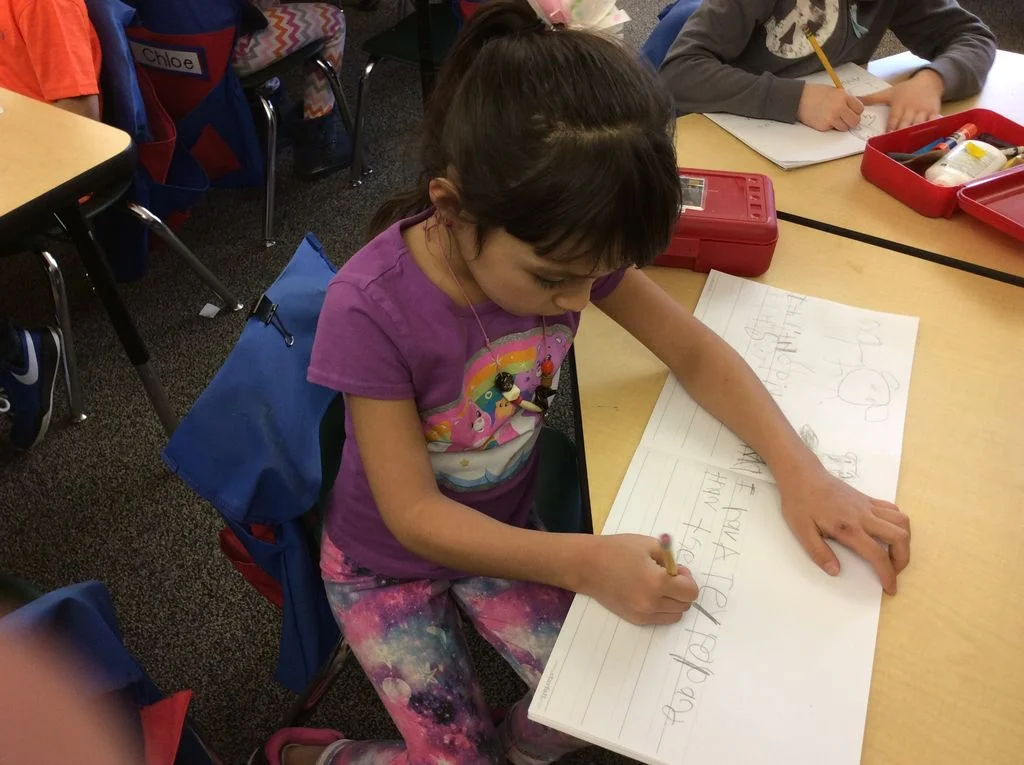
• Point to the lines as you repeat the sentence once again; next have the student do the same.
• Remember during scaffolding you are helping a student segment a word, identifying sounds as naturally spoken.
• Never isolate sounds! This would make this activity a phonics lesson rather than an authentic writing experience. Rather, state the word whole or ever so slightly rubber band the word. Never repeat the word in an exaggerated fashion. Keep the integrity of the word at all times.
• Ask student: “What is the first word in your sentence?” After student responds, repeat the student’s word back to him, such as “My.” “What is the first sound you hear in my?”
• Child will reply /m/*. Great, do you know what letter makes that sound? Okay, write that letter. (Pointing to the appropriate line.) If the student does not know what letter makes the /m/ sound, draw his attention to the alphabet chart and tell him that the /m/ is made by m. Ask him to write that letter.
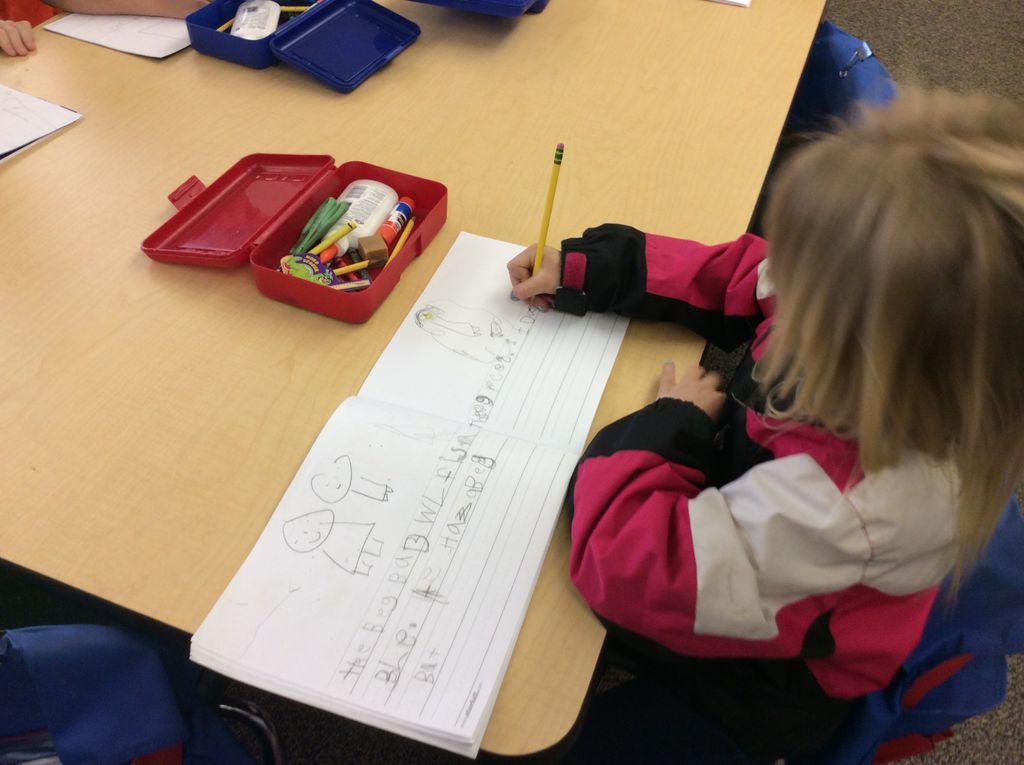
• *If the student cannot hear any sounds independently, assist him in hearing the beginning sounds of the word, show the letter that makes the sound on the chart, and ask him to write that letter. Follow this process for each word always assuming that the student will hear the sound himself. At these beginning stages, concentrate on one three word sentences during guided writing and assure that the student is getting additional practice in sound/symbol relationships. Also, give struggling students more practice using structure or model writing experiences.
• After the student has identified the /m/ sound ask him if he hears any other sounds in the word my. (If the student hears /ï/, have him write it in the appropriate space. If he does not hear it, simply go to the next word. At the early stages of scaffold writing it is acceptable for the child to write the word my as mi or even m. Later as writing skills develop and sight words have been introduced, move to spelling high frequency words displayed on the word wall with conventional spelling.
• Continue this process until the sentence is complete. As the student develops, encourage him to write additional sentences. Always move student to the next level keeping within the zone of his proximal development.
Click here to learn more about Guided Writing by listening to the podcast.


Also available at Teachers Pay Teachers!
These clean and simple Anchor Posters server as the visual link your students need to become independent, emergent writers.

Also available at Teachers Pay Teachers!
Are you looking to greatly improve student writing in your kindergarten classroom?
These Writing Continuum Cards align to kindergarten core expectations. These simple cards allow students to self monitor as they work towards the progression to the next level of writing.
This continuum includes six steps: 1) Prewriting 2) Random Letter Stage 3) Emergent Stage 4) Developmental Stage 5) Pre-Conventional Stage 6) Conventional Stage.
Each card describes the characteristics that reflect the writing stage in a “I Can” format. The characteristics are written clearly to allow students understanding of the learning necessary as they move forward to the next writing level. Providing these clearly written anchor cards motivate young writers to aspire to reach greater heights.
Also available at Teachers Pay Teachers!
Writing Lessons and Writing Prompts
It is easy to teach writing standards by using the methods included in this Writing to Read Packet. It includes:
Fourteen pages of writing tips and methods. Including a step by step delivery method of Scaffold Writingbased on the works of Vygotsky.
Four scripted lessons to increase writing independence: Nouns, Adjectives, Beginning-Middle-End and Spaces
Three Hundred Fifty Five pages ready to copy writing prompts to put in students writing binders. Four style choices are included.
© Kindergarten Kiosk
You Might Also Like
Writing Stages Self-Assessment Cards
Writing Center Independent Writing Practice Bundle
Follow For Updates and Freebies!
Be alerted as products are updated and/or added to. Get Special Freebies.