
Painting Spring

Allow students opportunity to be budding artists by painting flowers.
Learning to draw means learning to see! Painting flowers is a fantastic way to give students opportunity to create by looking at, thinking about, and discovering. It is the perfect way to help students see that nature is made from a vast amount of shapes, colors, and textures.
I begin my flower painting lesson by showing my students examples of great artists like Georgia O'Keeffe, Pablo Picasso and Vincent Van Gough. It is very powerful to show their work of art side-by-side to the real object; in this case a flower.

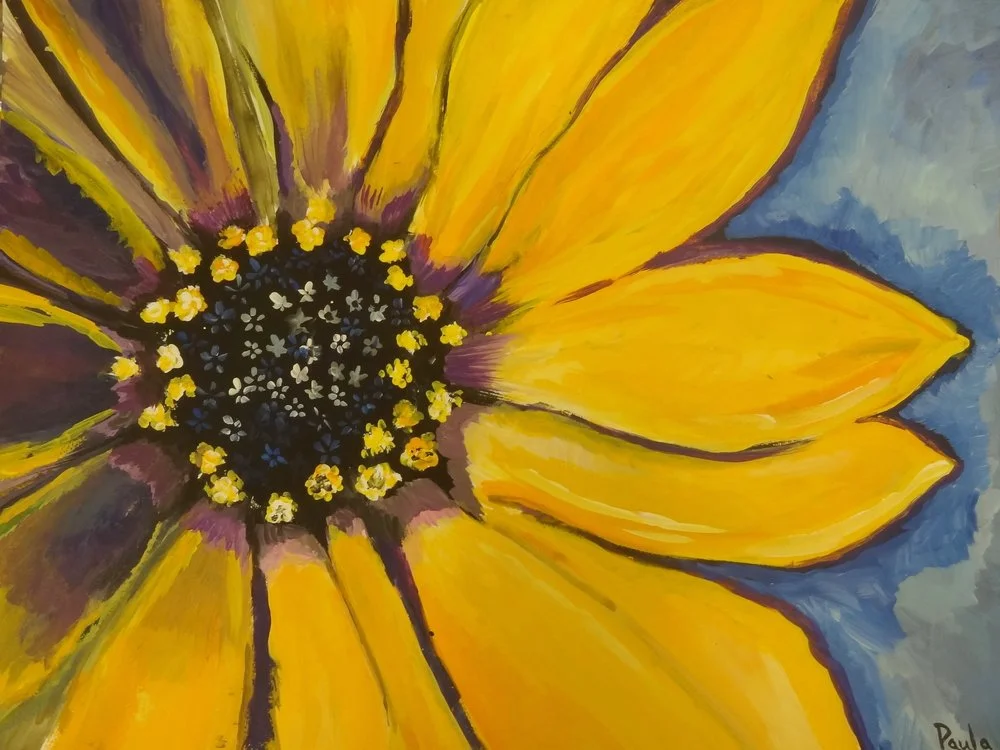
After a mini-lesson looking closely at the shapes we can use to draw a flower and experimenting with some lines and shapes on doodle paper, it is time to fill the art center with the proper tools to inspire art.
I hang real photos of flowers, paintings of flowers, and place several bouquets of real flowers in the area. Because my job from this point on is to simply provide inspiration, I have now set the stage.
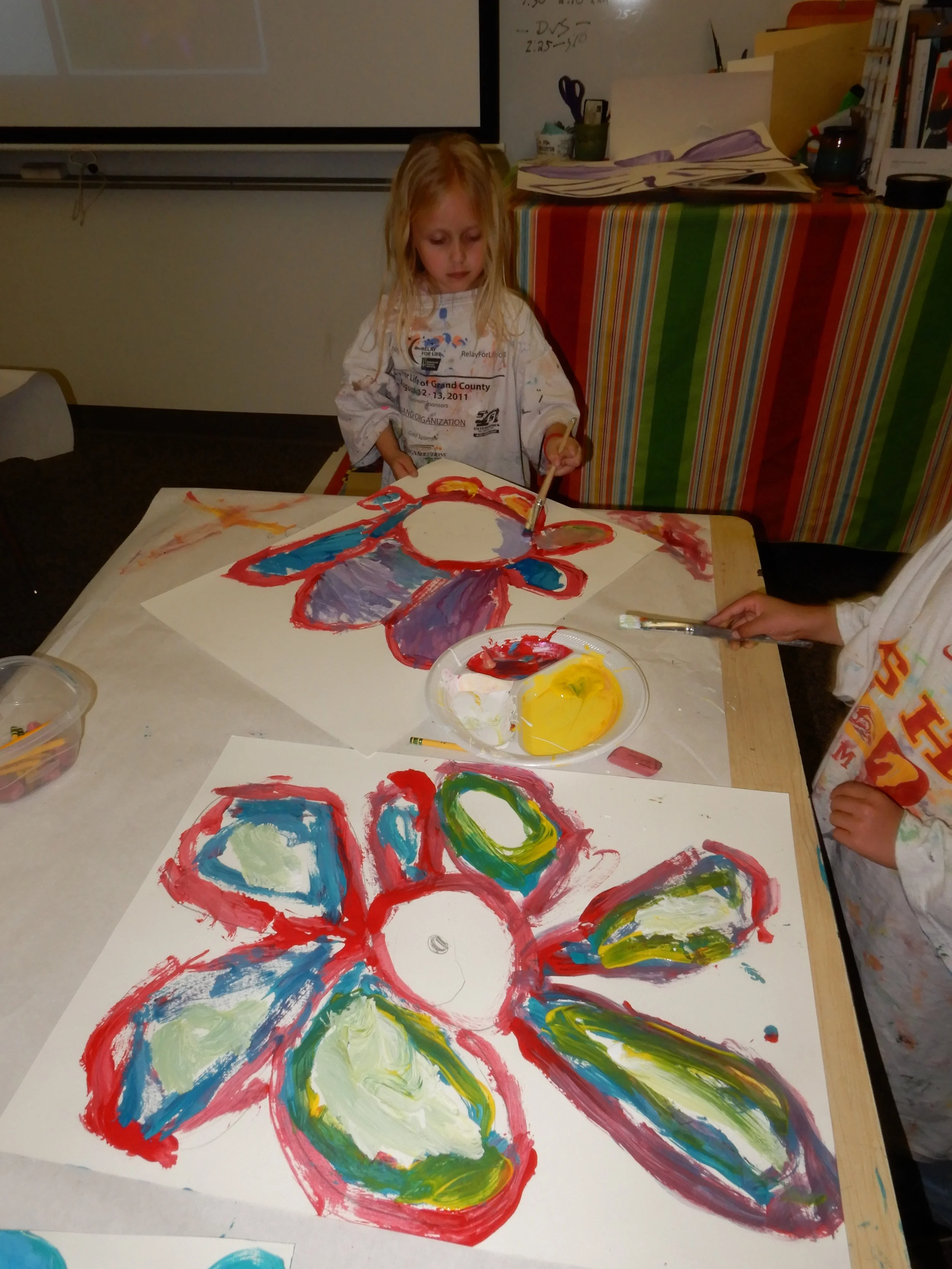
I am always sure to stock the art area with paints, brushes, pastels, kwiksticks, chalk, crayons, pencils, materials for collage such as tissue paper, pom-poms, etc. With this well-stocked supply of art materials and the inspiration of paintings, photos, and relia, the students are always eager to create their masterpiece.
One important step of inspiring young artists is to treat their art with the professionalism it deserves. Make sure their work is signed and displayed!

Georgia O'Keefe? No just a kindergartner in action.
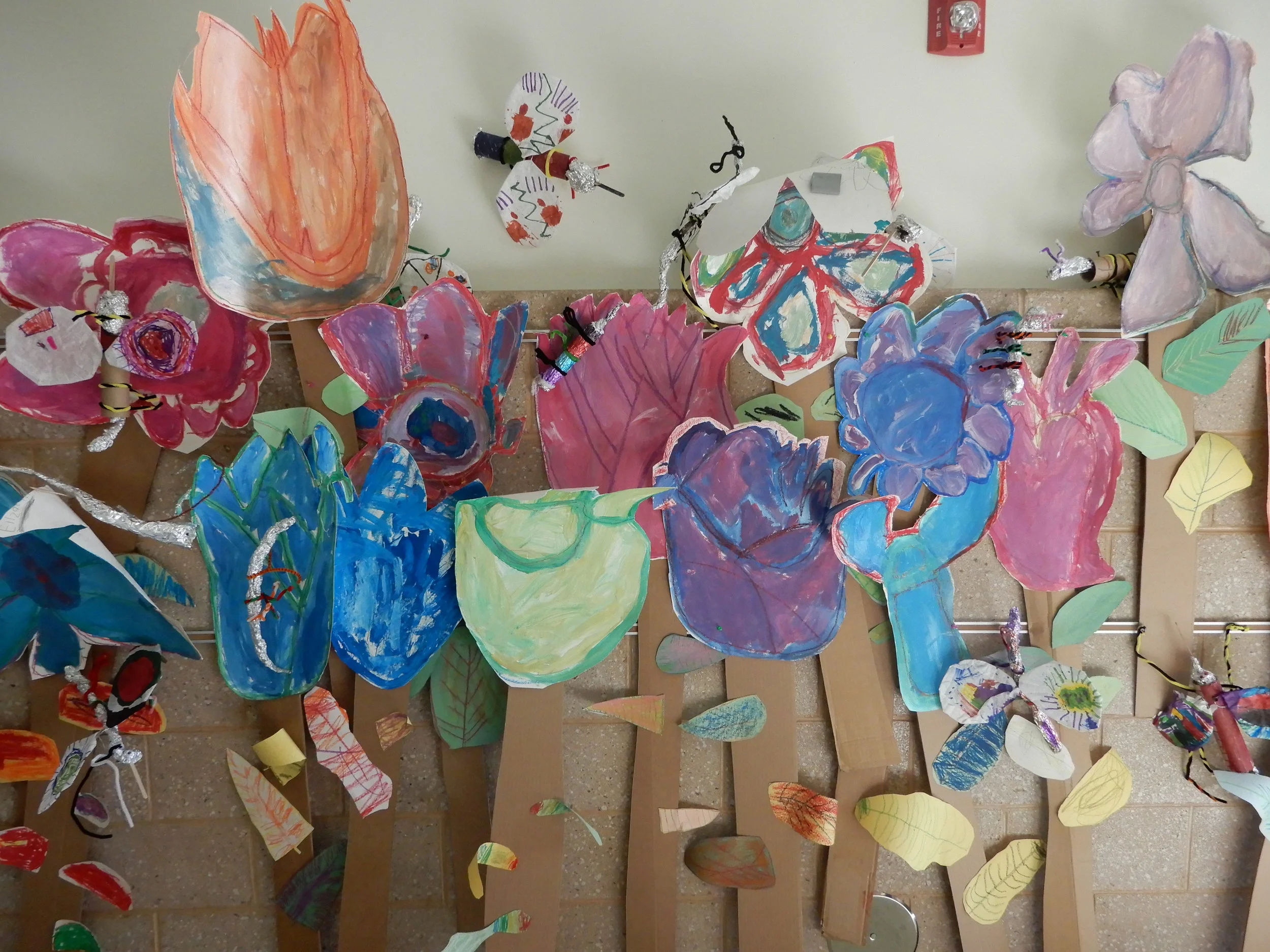
This is a display of giant flowers made in the art room under the guidance of "Art Coach."
Here are two of my favorite thematic units to guide your cross-curricular teaching. Click on the picture to read the contents. Also available at TPT.
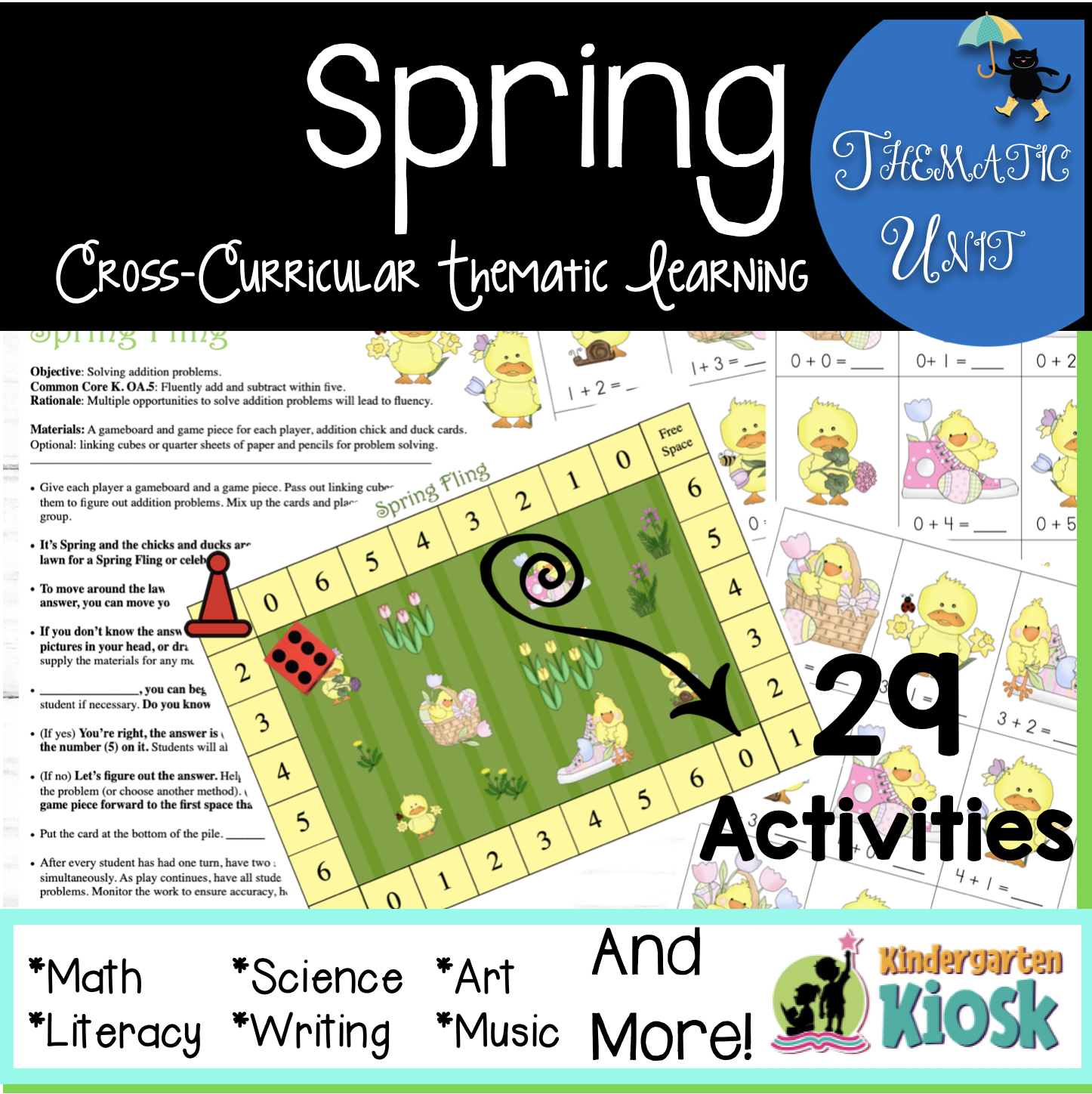
Also available at Teachers Pay Teachers!
Product Description
This Spring Activities packet is filled with authentic active learning activities that will thrill your classroom or homeschool students as they learn important academic skills.
It's a Spring Thing is strategically linked to the common core standards, based on proven reading, math, and science research and best practices.
The activities are divided into areas of literature, music, art, literacy, math, science, creative writing, word wall, and guided reading. The activities are clearly written, differentiated, easy to use, and need limited amounts of preparation. When laminated and filed, these become Ready to Go for your teaching years ahead!
Contents Include:
Literacy Games
Lambs & Lions: Naming Letters Quickly
Lambs & Lions: Sight Word Fluency
Let’s Go Fly a Kite: Alphabet Fluency
Let’s Go Fly a Kite: Sight Word Fluency
The Bird’s Nest: Building Familiarity With Punctuation Marks
Abracadabra: Decoding CVC Words (Or Nonsense Words)
Hens and Chicks: Reading Reading CVC Words
Spring Words Worksheet: Distinguishing Between Similar Words
Math Games:
April Showers Bring May Flowers: Decomposing Numbers
Fly Away Birdie: Solving Subtraction Problems
Spring Fling: Solving Addition Problems
Runaway Chicks: Solving Mathematical Problems Using 5-Frames
Bountiful Bunnies: Decomposing Numbers
Who Is Ready For Spring?: Connecting Numbers 1-43
Hippity Hop: Connecting Numbers 1-47
Songs and Fingerplays
It is Springtime
Springtime
March Wind
Put Up Your Umbrella
Science Projects
Jello Mixing: Mixing Colors Tactilely
Color Mixing: Making Secondary Colors
Paint Mixing: Recording Data From an Experiment
Art Projects
Lamb & Lion: Portfolio Sample
Under the Umbrella: Portfolio Sample
Vase of Flowers: Artist Study
Easter Bunny Hat
Writing
What I Like About Spring
The Easter Bunny
Guided Reading Books
Mix It Up
You Might Also Like
Pond Independent Writing Center Activities
Also available at Teachers Pay Teachers!
Product Description
Strategically Linked to the common core, this best-selling Thematic plant unit is divided into areas of literature, media, music, art, literacy activities, math activities, worksheets, science activities, creative writing, word wall words, and guided reading for cross-curricular learning.
The activities are clearly written, easy to use, and need limited amounts of preparation. The lessons are fun and engaging and will leave your classroom or homeschool students begging for more.
Math Center Activities
Flowering Math: Joining Sets
Watermelon War: Comparing Numerals
Garden Party: Demonstrating Subtraction
Counting Seeds: Count out items to match a given number.
Planting Seeds: Making Combinations to 10
Adding Flowers
Garden Takeaway
Plant a Garden Ways to Make 8
Reading Center Activities:
Flower Garden: Reading Sight Word & CVC Word Sentences (or alphabet recognition).
Tip Toe Through the Tulips: Alphabet letter sound fluency (or sight word fluency)
Run Rabbit Run: Alphabet Letter Fluency
In the Garden: Naming Sight Words
Greenhouse Words: Reading Sight Words
Blooming Words: Isolating Phonemes & Writing CVC Words From Dictation
The Garden Show: Writing Color Words
Science Activities
Building a Science Center
A Seed Grows: Planting a seed in a bag
Kitchen Science: Edible Dirt
Plant Parts: Observation of Plants
The Thirsty Stem: Capillary Action In Plants
Seed Sorting: Using the Scientific Process
Art Projects
Plant Parts: Portfolio Sample
Artful Flowers
Mother's Day Flower
Fingerprint Flowers
Songs
Watermelon Pie
Inch by Inch (adapted) by David Mallet
Plant A Seed
Guided Reading
The Little Seed
Writing
Plant Word Wall Words
Prompts: All About Seeds,What I Know About Plants
I Can Writing: Label it, list it card it
Pond Independent Writing Center Activities
Spring Themed Intervention Games
Lamb and Lion Spring Themed Activities
Each activity is clearly written, easy to use, and needs limited preparation. The lessons are fun and engaging and will leave your students begging for more!